 Birds (class Aves) are feathered, winged, bipedal, endothermic (warm-blooded), egg-laying, vertebrate animals. With around 10,000 living species, they are the most speciose class of tetrapod vertebrates. All present species belong to the subclass Neornithes, and inhabit ecosystems across the globe, from the Arctic to the Antarctic. Extant birds range in size from the 5 cm (2 in) Bee Hummingbird to the 2.75 m (9 ft) Ostrich. The fossil record indicates that birds emerged within theropod dinosaurs during the Jurassic period, around 150 million years ago. Paleontologists regard birds as the only clade of dinosaurs to have survived the Cretaceous–Paleogene extinction event 66 million years ago.
 A party is a gathering of people who have been invited by a host for the purposes of socializing, conversation, or recreation. A party will typically feature food and beverages, and often music and dancing as well.
Some parties are held in honor of a specific person, day, or event (e.g., a birthday party, a Super Bowl party, or a St. Patrick’s Day party). Parties of this kind are often called celebrations. A party is not necessarily a private occasion. Public parties are sometimes held in restaurants, pubs, or bars, and people attending such parties may be charged an admission fee by the host.
 A bicycle, often called a bike, is a human-powered, pedal-driven, single-track vehicle, having two wheels attached to a frame, one behind the other. A person who rides a bicycle is called a cyclist, or bicyclist.
Bicycles were introduced in the 19th century in Europe and now number more than a billion worldwide, twice as many as automobiles. They are the principal means of transportation in many regions. They also provide a popular form of recreation, and have been adapted for such uses as children's toys, general fitness, military and police applications, courier services and bicycle racing.
The basic shape and configuration of a typical upright, or safety bicycle, has changed little since the first chain-driven model was developed around 1885. However, many details have been improved, especially since the advent of modern materials and computer-aided design. These have allowed for a proliferation of specialized designs for diverse types of cycling.
The invention of the bicycle has had an enormous effect on society, both in terms of culture and of advancing modern industrial methods. Several components that eventually played a key role in the development of the automobile were invented for the bicycle, including ball bearings, pneumatic tires, chain-driven sprockets, and tension-spoked wheels.
 The true finches are passerine birds in the family Fringillidae. They are predominantly seed-eating songbirds. Most are native to the Northern Hemisphere, but one subfamily is endemic to the Neotropics, one to the Hawaiian Islands, and one subfamily – monotypic at genus level – is found only in the Palaearctic. The scientific name Fringillidae comes from the Latin word fringilla for the Common Chaffinch (Fringilla coelebs) – a member of that last subfamily – which is common in Europe.
Many birds in other families are also commonly called "finches", including some species in the very similar-looking waxbills or estrildid finches (family Passeridae, subfamily Estrildinae) of the Old World tropics and Australia; several groups of the bunting and American sparrow family (Emberizidae); and Darwin's finches of the Galapagos islands, which provided evidence of natural selection and are now recognized to be peculiar tanagers (Thraupidae).
 Whale (origin Old English hwæl) is the common name for various marine mammals of the order Cetacea. The term whale sometimes refers to all cetaceans, but more often it excludes dolphins and porpoises, which belong to the suborder Odontoceti (toothed whales). This suborder also includes the sperm whale, killer whale, pilot whale, and beluga whale. The other Cetacean suborder, Mysticeti (baleen whales), comprises filter feeders that eat small organisms caught by straining seawater through a comblike structure found in the mouth called baleen. This suborder includes the blue whale, the humpback whale, the bowhead whale and the minke whale. All cetaceans have forelimbs modified as fins, a tail with horizontal flukes, and nasal openings (blowholes) on top of the head.
Whales range in size from the blue whale, the largest animal known to have ever existed at 30 m (98 ft) and 180 tonnes (180 long tons; 200 short tons), to various pygmy species, such as the pygmy sperm whale at 3.5 m (11 ft). Whales collectively inhabit all the world's oceans and number in the millions, with annual population growth rate estimates for various species ranging from 3% to 13%.
 A nest is a place of refuge to hold an animal's eggs or provide a place to live or raise offspring. They are usually made of some organic material such as twigs, grass, and leaves; or may simply be a depression in the ground, or a hole in a tree, rock or building. Human-made materials, such as string, plastic, cloth, hair or paper, may also be used.
Generally each species has a distinctive style of nest. Nests can be found in many different habitats. They are built primarily by birds, but also by mammals (e.g. squirrels), fish, insects (e.g. wasps, termites and honey bees) and reptiles (e.g. snakes and turtles).
The urge to prepare an area for the building of a nest is referred to as the nesting instinct and may occur in both mammals (bears, gorillas, ...) and birds.
 A symphony is an extended musical composition in Western classical music, scored almost always for orchestra. A symphony usually contains at least one movement or episode composed according to the sonata principle. Many symphonies are tonal works in four movements with the first in sonata form, which is often described by music theorists as the structure of a "classical" symphony, although many symphonies by the acknowledged classical masters of the form, Joseph Haydn, Wolfgang Amadeus Mozart, and Ludwig van Beethoven do not conform to this model.
 Drawing is a form of visual art that makes use of any number of drawing instruments to mark a two-dimensional medium. Instruments used include graphite pencils, pen and ink, inked brushes, wax color pencils, crayons, charcoal, chalk, pastels, various kinds of erasers, markers, styluses, and various metals (such as silverpoint). An artist who practices or works in drawing may be called a draftsman or draughtsman.
A small amount of material is released onto the two dimensional medium, leaving a visible mark. The most common support for drawing is paper, although other materials, such as cardboard, plastic, leather, canvas, and board, may be used. Temporary drawings may be made on a blackboard or whiteboard or indeed almost anything. The medium has been a popular and fundamental means of public expression throughout human history. It is one of the simplest and most efficient means of communicating visual ideas. The relatively easy availability of basic drawing instruments makes drawing more universal than most other media.
 Freedom of speech is the political right to communicate one's opinions and ideas. The term freedom of expression is sometimes used synonymously, but includes any act of seeking, receiving and imparting information or ideas, regardless of the medium used. In practice, the right to freedom of speech is not absolute in any country and the right is commonly subject to limitations, as with libel, slander, obscenity, sedition (including, for example inciting ethnic hatred), copyright violation, revelation of information that is classified or otherwise.
The right to freedom of expression is recognized as a human right under Article 19 of the Universal Declaration of Human Rights and recognized in international human rights law in the International Covenant on Civil and Political Rights (ICCPR). Article 19 of the ICCPR states that "[e]veryone shall have the right to hold opinions without interference" and "everyone shall have the right to freedom of expression; this right shall include freedom to seek, receive and impart information and ideas of all kinds, regardless of frontiers, either orally, in writing or in print, in the form of art, or through any other media of his choice". Article 19 goes on to say that the exercise of these rights carries "special duties and responsibilities" and may "therefore be subject to certain restrictions" when necessary "[f]or respect of the rights or reputation of others" or "[f]or the protection of national security or of public order (order public), or of public health or morals".
Freedom of speech may be legally curtailed in some religious legal systems and in secular jurisdictions where it is found to cause religious offense, such as the British Racial and Religious Hatred Act 2006.
 Hide-and-seek or hide-and-go-seek is a game in which a number of players conceal themselves in the environment, to be found by one or more seekers. The game is played by one player (designated as being "it") counting to a predetermined number while the other players hide. After reaching the number, the player who is "it" tries to find the other players. The game is an example of an oral tradition, as it is commonly passed down by children to younger children.
After the player designated as "it" finds another player, the found player must run to base, before s/he is tagged by "it." In some versions, after the first player is caught, it calls out "Ollie Ollie oxen free" (or "all outs, all in free" or many other variations) to signal the other hiders to return to base for the next round. In yet another version, when players are caught, they help the "it" seek out others. The phrase "Ollie Ollie oxen free" may derive from the German "Alles, Alles auch so ein frei!" ("Everyone, everyone is also as free as this person I just tagged out!") Since there have been a large influx of German peoples to the United States since the 1800s bringing culture and loan words. This seems a likely explanation for the origin of this phrase and aspect of the game in the United States.
Different versions of the game are played around the world, under a variety of names. One derivative game is called "sardines", in which only one person hides and the others must find them, hiding with them when they do so. The hiding places become progressively more cramped, like sardines in a tin. The last person to find the hiding group is the loser. A. M. Burrage calls this version of the game 'Smee' in his 1931 ghost story of the same name.
 Ninety-five percent of bird species are socially monogamous. These species pair for at least the length of the breeding season or—in some cases—for several years or until the death of one mate. Monogamy allows for biparental care, which is especially important for species in which females require males' assistance for successful brood-rearing. Among many socially monogamous species, extra-pair copulation (infidelity) is common. Such behaviour typically occurs between dominant males and females paired with subordinate males, but may also be the result of forced copulation in ducks and other anatids. For females, possible benefits of extra-pair copulation include getting better genes for her offspring and insuring against the possibility of infertility in her mate. Males of species that engage in extra-pair copulations will closely guard their mates to ensure the parentage of the offspring that they raise.
 Frogs are a diverse and largely carnivorous group of short-bodied, tailless amphibians composing the order Anura (Ancient Greek an-, without + oura, tail). The oldest fossil "proto-frog" appeared in the early Triassic of Madagascar, but molecular clock dating suggests their origins may extend further back to the Permian, 265 million years ago. Frogs are widely distributed, ranging from the tropics to subarctic regions, but the greatest concentration of species diversity is found in tropical rainforests. There are approximately 4,800 recorded species, making them among the most diverse vertebrate groups.
The body plan of an adult frog is generally characterized by a stout body, protruding eyes, cleft tongue, limbs folded underneath and the absence of a tail. Besides living in fresh water and on dry land, the adults of some species are adapted for living underground or in trees. The skin of the frog is glandular, with secretions ranging from distasteful to toxic. Warty species of frog tend to be called toads. Frog warts are elevations in the skin where glandular toxins tend to concentrate. The distinction between frogs and toads is based on informal naming conventions concentrating on the warts rather than taxonomy or evolutionary history; some toads are more closely related to frogs than other toads. Frogs' skins vary in colour from well-camouflaged dappled brown, grey and green to vivid patterns of bright red or yellow and black to advertise toxicity and warn off predators.
Frogs typically lay their eggs in water. The eggs hatch into aquatic larvae, called tadpoles, that have tails and internal gills. They have highly specialized rasping mouth parts suitable for herbivorous, omnivorous or planktivorous diets. The life cycle is completed when they metamorphose into adults. A few species deposit eggs on land or bypass the tadpole stage. Adult frogs generally have a carnivorous diet consisting of small invertebrates, but omnivorous species exist and a few feed on fruit. Frogs are extremely efficient at converting what they eat into body mass, which makes them an important food source for predators. Frogs are a keystone group in the food web dynamics of many of the world's ecosystems. The skin is semi-permeable, making frogs susceptible to dehydration, so they either live in moist places or have special adaptations to deal with dry habitats. Frogs produce a wide range of vocalizations, particularly in their breeding season, and exhibit many different kinds of complex behaviours to attract mates, to fend off predators and to generally survive.
Frog populations around the world have declined significantly since the 1950s. More than one third of species are considered to be threatened with extinction and over one hundred and twenty are believed to have become extinct since the 1980s. The number of malformations among frogs is on the rise and an emerging fungal disease, chytridiomycosis, has spread around the world. Conservation biologists are working to understand the causes of these problems and to resolve them. Frogs are valued as food by humans and also have many cultural roles in literature, symbolism and religion.
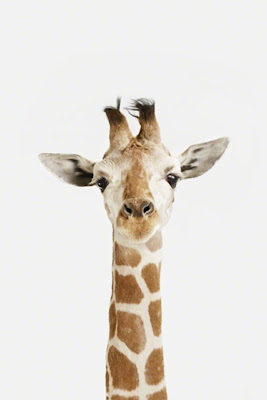
The giraffe (Giraffa camelopardalis) is an African even-toed ungulate mammal, the tallest living terrestrial animal and the largest ruminant. Its species name refers to its camel-like appearance and the patches of color on its fur. Its chief distinguishing characteristics are its extremely long neck and legs, its horn-like ossicones and its distinctive coat patterns. It stands 5–6 m (16–20 ft) tall and has an average weight of 1,600 kg (3,500 lb) for males and 830 kg (1,800 lb) for females. It is classified under the family Giraffidae, along with its closest extant relative, the okapi. The 9 subspecies are distinguished by their coat patterns.
The giraffe's scattered range extends from Chad in the north to South Africa in the south, and from Niger in the west to Somalia in the east. Giraffes usually inhabit savannas, grasslands, and open woodlands. Their primary food source is acacia leaves, which they can browse at heights above which most other herbivores cannot reach. Giraffes are preyed on by lions, and calves are also targeted by leopards, spotted hyenas and wild dogs. Adult giraffes do not have strong social bonds, though they do gather in loose aggregations if they happen to be moving in the same general direction. Males establish social hierarchies through "necking", which are combat bouts where the neck is used as a weapon. Dominant males gain mating access to females, which bear the sole responsibility for raising the young.
The giraffe has intrigued various cultures, both ancient and modern, for its peculiar appearance, and has often been featured in paintings, books and cartoons. It is classified by the International Union for Conservation of Nature as Least Concern, but has been extirpated from many parts of its former range, and some subspecies are classified as Endangered. Nevertheless, giraffes are still found in numerous national parks and game reserves.

The giraffe (Giraffa camelopardalis) is an African even-toed ungulate mammal, the tallest living terrestrial animal and the largest ruminant. Its species name refers to its camel-like appearance and the patches of color on its fur. Its chief distinguishing characteristics are its extremely long neck and legs, its horn-like ossicones and its distinctive coat patterns. It stands 5–6 m (16–20 ft) tall and has an average weight of 1,600 kg (3,500 lb) for males and 830 kg (1,800 lb) for females. It is classified under the family Giraffidae, along with its closest extant relative, the okapi. The 9 subspecies are distinguished by their coat patterns.
The giraffe's scattered range extends from Chad in the north to South Africa in the south, and from Niger in the west to Somalia in the east. Giraffes usually inhabit savannas, grasslands, and open woodlands. Their primary food source is acacia leaves, which they can browse at heights above which most other herbivores cannot reach. Giraffes are preyed on by lions, and calves are also targeted by leopards, spotted hyenas and wild dogs. Adult giraffes do not have strong social bonds, though they do gather in loose aggregations if they happen to be moving in the same general direction. Males establish social hierarchies through "necking", which are combat bouts where the neck is used as a weapon. Dominant males gain mating access to females, which bear the sole responsibility for raising the young.
The giraffe has intrigued various cultures, both ancient and modern, for its peculiar appearance, and has often been featured in paintings, books and cartoons. It is classified by the International Union for Conservation of Nature as Least Concern, but has been extirpated from many parts of its former range, and some subspecies are classified as Endangered. Nevertheless, giraffes are still found in numerous national parks and game reserves.

An island pron.: /ˈaɪlənd/ or isle /ˈaɪl/ is any piece of sub-continental land that is surrounded by water. Very small islands such as emergent land features on atolls can be called islets, skerries, cays or keys. An island in a river or an island in a lake may be called an eyot /ˈaɪ.ət/ (also ait /ˈeɪt/), or holm. A grouping of geographically or geologically related islands is called an archipelago.
An island may still be described as such despite the presence of an artificial land bridge, for example Singapore and its causeway, or the various Dutch delta islands, such as IJsselmonde. Some places may even retain "island" in their names for historical reasons after being connected to a larger landmass by a wide land bridge, such as Coney Island. Conversely, when a piece of land is separated from the mainland by a man-made canal, for example the Peloponnese by the Corinth Canal, it is generally not considered an island.
There are two main types of islands: continental islands and oceanic islands. There are also artificial islands.
 Penguins (order Sphenisciformes, family Spheniscidae) are a group of aquatic, flightless birds living almost exclusively in the southern hemisphere, especially in Antarctica. Highly adapted for life in the water, penguins have countershaded dark and white plumage, and their wings have evolved into flippers. Most penguins feed on krill, fish, squid, and other forms of sealife caught while swimming underwater. They spend about half of their lives on land and half in the oceans.
Although all penguin species are native to the southern hemisphere, they are not found only in cold climates, such as Antarctica. In fact, only a few species of penguin live so far south. Several species are found in the temperate zone, and one species, the Galápagos Penguin, lives near the equator.
The largest living species is the Emperor Penguin (Aptenodytes forsteri): on average adults are about 1.1 m (3 ft 7 in) tall and weigh 35 kg (75 lb) or more. The smallest penguin species is the Little Blue Penguin (Eudyptula minor), also known as the Fairy Penguin, which stands around 40 cm tall (16 in) and weighs 1 kg (2.2 lb). Among extant penguins, larger penguins inhabit colder regions, while smaller penguins are generally found in temperate or even tropical climates (see also Bergmann's Rule). Some prehistoric species attained enormous sizes, becoming as tall or as heavy as an adult human. These were not restricted to Antarctic regions; on the contrary, subantarctic regions harboured high diversity, and at least one giant penguin occurred in a region not quite 2,000 km south of the equator 35 mya, in a climate decidedly warmer than today.
 Dolphins are marine mammals closely related to whales and porpoises. There are almost forty species of dolphin in 17 genera. They vary in size from 1.2 m (4 ft) and 40 kg (90 lb) (Maui's dolphin), up to 9.5 m (30 ft) and 10 tonnes (9.8 long tons; 11 short tons) (the orca or killer whale). They are found worldwide, mostly in the shallower seas of the continental shelves, and are carnivores, eating mostly fish and squid. The family Delphinidae is the largest in the Cetacean order, and evolved relatively recently, about ten million years ago, during the Miocene. Dolphins are among the most intelligent animals, and their often friendly appearance, an artifact of the "smile" of their mouthline, and seemingly playful attitude have made them very popular in human culture.
 The domestic cat is a small, usually furry, domesticated, carnivorous mammal. It is often called the housecat when kept as an indoor pet, or simply the cat when there is no need to distinguish it from other felids and felines. Cats are valued by humans for companionship and their ability to hunt vermin and household pests.
Cats are similar in anatomy to the other felids, with strong, flexible bodies, quick reflexes, sharp retractable claws, and teeth adapted to killing small prey. Cat senses fit a crepuscular and predatory ecological niche. Cats can hear sounds too faint or too high in frequency for human ears, such as those made by mice and other small game. They can see in near darkness. Like most mammals, cats have poorer color vision and a better sense of smell than humans.

Whale (origin Old English hwæl) is the common name for various marine mammals of the order Cetacea. The term whale sometimes refers to all cetaceans, but more often it excludes dolphins and porpoises, which belong to the suborder Odontoceti (toothed whales). This suborder also includes the sperm whale, killer whale, pilot whale, and beluga whale. The other Cetacean suborder, Mysticeti (baleen whales), comprises filter feeders that eat small organisms caught by straining seawater through a comblike structure found in the mouth called baleen. This suborder includes the blue whale, the humpback whale, the bowhead whale and the minke whale. All cetaceans have forelimbs modified as fins, a tail with horizontal flukes, and nasal openings (blowholes) on top of the head.
Whales range in size from the blue whale, the largest animal known to have ever existed at 30 m (98 ft) and 180 tonnes (180 long tons; 200 short tons), to various pygmy species, such as the pygmy sperm whale at 3.5 m (11 ft). Whales collectively inhabit all the world's oceans and number in the millions, with annual population growth rate estimates for various species ranging from 3% to 13%.
 Lizards are a widespread group of squamate reptiles, with more than 5600 species, ranging across all continents except Antarctica, as well as most oceanic island chains. The group, traditionally recognized as the suborder Lacertilia, is defined as all extant members of the Lepidosauria (reptiles with overlapping scales) that are neither sphenodonts (i.e., tuatara) nor snakes – they form an evolutionary grade. While the snakes are recognized as falling phylogenetically within the Toxicofera clade from which they evolved, the sphenodonts are the sister group to the squamates, the larger monophyletic group, which includes both the lizards and the snakes.
Lizards typically have feet and external ears, while snakes lack both of these characteristics. However, because they are defined negatively as excluding snakes, lizards have no unique distinguishing characteristic as a group. Lizards and snakes share a movable quadrate bone, distinguishing them from the sphenodonts, which have more primitive and solid diapsid skulls. Many lizards can detach their tails to escape from predators, an act called autotomy, but this ability is not shared by all lizards. Vision, including color vision, is particularly well developed in most lizards, and most communicate with body language or bright colors on their bodies, as well as with pheromones.
The adult length of species within the suborder ranges from a few centimeters for chameleons such as Brookesia micra and geckos such as Sphaerodactylus ariasae to nearly 3 m (9.8 ft) in the case of the largest living varanid lizard, the Komodo dragon. Some extinct varanids reached great size. The extinct aquatic mosasaurs reached 17 m (56 ft), and the giant monitor Megalania is estimated to have reached perhaps 7 m (23 ft).


