A grave is a location where a dead body (typically that of a human, although sometimes that of an animal) is buried. Graves are usually located in special areas set aside for the purpose of burial, such as graveyards or cemeteries.
Certain details of a grave, such as the state of the body found within it and any objects found with the body, may provide information for archaeologists about how the body may have lived before its death, including (but not limited to) the time period in which it lived and the culture that it had been a part of.
In some religions, it is believed that the body must be burned for the soul to survive; in others, the complete decomposition.
 Karolína Isela Kurková, also Karolina Kurkova is a Czech model, best known as a former Victoria's Secret Angel, and actress. Mario Testino said of Kurková: "The proportions of her body and her face, as well as her energy level, make her a model who could fit almost into any moment." Vogue editor Anna Wintour called her the "next supermodel".
Kurková is among the world's top-earning models, having earned an estimated $5 million in the year 2007. She was placed 6th in the Forbes annual list of the highest earning models.
 Karolína Isela Kurková, also Karolina Kurkova is a Czech model, best known as a former Victoria's Secret Angel, and actress. Mario Testino said of Kurková: "The proportions of her body and her face, as well as her energy level, make her a model who could fit almost into any moment." Vogue editor Anna Wintour called her the "next supermodel".
Kurková is among the world's top-earning models, having earned an estimated $5 million in the year 2007. She was placed 6th in the Forbes annual list of the highest earning models.
 Karolína Isela Kurková, also Karolina Kurkova is a Czech model, best known as a former Victoria's Secret Angel, and actress. Mario Testino said of Kurková: "The proportions of her body and her face, as well as her energy level, make her a model who could fit almost into any moment." Vogue editor Anna Wintour called her the "next supermodel".
Kurková is among the world's top-earning models, having earned an estimated $5 million in the year 2007. She was placed 6th in the Forbes annual list of the highest earning models.
 Feathers are one of the epidermal growths that form the distinctive outer covering, or plumage, on birds and some non-avian theropod dinosaurs. They are considered the most complex integumentary structures found in vertebrates, and indeed a premier example of a complex evolutionary novelty. They are among the characteristics that distinguish the extant Aves from other living groups. Feathers have also been noticed in those Theropoda which have been termed feathered dinosaurs. Although feathers cover most parts of the body of birds, they arise only from certain well-defined tracts on the skin. They aid in flight, thermal insulation, waterproofing and coloration that helps in communication and protection.

A fireplace is an architectural structure designed to contain a fire for heating, as well as for cooking. Fireplaces are also used for the relaxing ambiance they create. A fire is contained in a firebox or firepit; a chimney or other flue allows exhaust to escape. A fireplace may have: a foundation, a hearth, a firebox, a mantel, an ashdump door, a chimney crane, a cleanout door, a grate, a lintel, a lintel bar, overmantel, a chimney breast, a damper, a smoke chamber, a throat, a flue, a chimney chase, a crown, a cap, a shroud, or a spark arrestor.
Fireplaces have variable heat efficiency. Organizations like the Environmental Protection Agency and the Washington Department of Ecology warn that, according to various studies, fireplaces can pose a significant health risk. The EPA writes "Smoke may smell good, but it's not good for you."
 Mariko Shinoda is a singer, actress, fashion model, and one of members of the Japanese idol group AKB48, in which she is the captain of Team A.
 Mariko Shinoda is a singer, actress, fashion model, and one of members of the Japanese idol group AKB48, in which she is the captain of Team A.
 A scientist, in a broad sense, is one engaging in a systematic activity to acquire knowledge. In a more restricted sense, a scientist is an individual who uses the scientific method. The person may be an expert in one or more areas of science. This article focuses on the more restricted use of the word. Scientists perform research toward a more comprehensive understanding of nature, including physical, mathematical and social realms.
Philosophy can be seen as a distinct activity, which is aimed towards a more comprehensive understanding of intangible aspects of reality and experience that cannot be physically measured.
Scientists are also distinct from engineers, those who develop devices that serve practical purposes. When science is done with a goal toward practical utility, it is called applied science (short of the creation of new devices that fall into the realm of engineering). When science is done with an inclusion of intangible aspects of reality it is called natural philosophy.
Social roles that partly correspond with the modern scientist can be identified going back at least until 17th century natural philosophy, but the term scientist is much more recent. Until the late 19th or early 20th century, those who pursued science were called "natural philosophers" or "men of science".
English philosopher and historian of science William Whewell coined the term scientist in 1833, and it was first published in Whewell's anonymous 1834 review of Mary Somerville's On the Connexion of the Physical Sciences published in the Quarterly Review. Whewell's suggestion of the term was partly satirical, a response to changing conceptions of science itself in which natural knowledge was increasingly seen as distinct from other forms of knowledge. Whewell wrote of "an increasing proclivity of separation and dismemberment" in the sciences; while highly specific terms proliferated—chemist, mathematician, naturalist—the broad term "philosopher" was no longer satisfactory to group together those who pursued science, without the caveats of "natural" or "experimental" philosopher. Members of the British Association for the Advancement of Science had been complaining about the lack of a good term at recent meetings, Whewell reported in his review; alluding to himself, he noted that "some ingenious gentleman proposed that, by analogy with artist, they might form [the word] scientist, and added that there could be no scruple in making free with this term since we already have such words as economist, and atheist—but this was not generally palatable".
Whewell proposed the word again more seriously (and not anonymously) in his 1840 The Philosophy of the Inductive Sciences:
We need very much a name to describe a cultivator of science in general. I should incline to call him a Scientist. Thus we might say, that as an Artist is a Musician, Painter, or Poet, a Scientist is a Mathematician, Physicist, or Naturalist.
He also proposed the term physicist at the same time, as a counterpart to the French word physicien. Neither term gained wide acceptance until decades later; scientist became a common term in the late 19th century in the United States and around the turn of the 20th century in Great Britain. By the twentieth century, the modern notion of science as a special brand of information about the world, practiced by a distinct group and pursued through a unique method, was essentially in place.
 A flower, sometimes known as a bloom or blossom, is the reproductive structure found in flowering plants (plants of the division Magnoliophyta, also called angiosperms). The biological function of a flower is to effect reproduction, usually by providing a mechanism for the union of sperm with eggs. Flowers may facilitate outcrossing (fusion of sperm and eggs from different individuals in a population) or allow selfing (fusion of sperm and egg from the same flower). Some flowers produce diaspores without fertilization (parthenocarpy). Flowers contain sporangia and are the site where gametophytes develop. Flowers give rise to fruit and seeds. Many flowers have evolved to be attractive to animals, so as to cause them to be vectors for the transfer of pollen.
In addition to facilitating the reproduction of flowering plants, flowers have long been admired and used by humans to beautify their environment, and also as objects of romance, ritual, religion, medicine and as a source of food.
 A flower, sometimes known as a bloom or blossom, is the reproductive structure found in flowering plants (plants of the division Magnoliophyta, also called angiosperms). The biological function of a flower is to effect reproduction, usually by providing a mechanism for the union of sperm with eggs. Flowers may facilitate outcrossing (fusion of sperm and eggs from different individuals in a population) or allow selfing (fusion of sperm and egg from the same flower). Some flowers produce diaspores without fertilization (parthenocarpy). Flowers contain sporangia and are the site where gametophytes develop. Flowers give rise to fruit and seeds. Many flowers have evolved to be attractive to animals, so as to cause them to be vectors for the transfer of pollen.
In addition to facilitating the reproduction of flowering plants, flowers have long been admired and used by humans to beautify their environment, and also as objects of romance, ritual, religion, medicine and as a source of food.
 Hair is a filamentous biomaterial, that grows from follicles found in the dermis. Hair is one of the defining characteristics of mammals.
The human body, apart from areas of glabrous skin, is covered in follicles which produce thick terminal and fine vellus hair. Most common interest in hair is focused on hair growth, hair types and hair care, but hair is also an important biomaterial primarily composed of protein, notably keratin. In many human societies, women predominantly grow the hair on their head long while men cut theirs short.
 Hair is a filamentous biomaterial, that grows from follicles found in the dermis. Hair is one of the defining characteristics of mammals.
The human body, apart from areas of glabrous skin, is covered in follicles which produce thick terminal and fine vellus hair. Most common interest in hair is focused on hair growth, hair types and hair care, but hair is also an important biomaterial primarily composed of protein, notably keratin. In many human societies, women predominantly grow the hair on their head long while men cut theirs short.
 Petra Silander is a Swedish fashion model residing in Paris.
 Petra Silander is a Swedish fashion model residing in Paris.
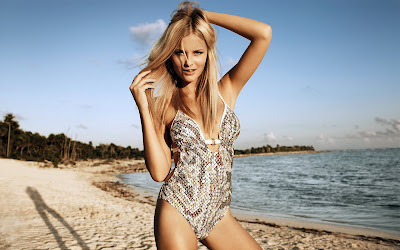
full size here:
1920 x 1200
Petra Silander is a Swedish fashion model residing in Paris.
 A flower, sometimes known as a bloom or blossom, is the reproductive structure found in flowering plants (plants of the division Magnoliophyta, also called angiosperms). The biological function of a flower is to effect reproduction, usually by providing a mechanism for the union of sperm with eggs. Flowers may facilitate outcrossing (fusion of sperm and eggs from different individuals in a population) or allow selfing (fusion of sperm and egg from the same flower). Some flowers produce diaspores without fertilization (parthenocarpy). Flowers contain sporangia and are the site where gametophytes develop. Flowers give rise to fruit and seeds. Many flowers have evolved to be attractive to animals, so as to cause them to be vectors for the transfer of pollen.
In addition to facilitating the reproduction of flowering plants, flowers have long been admired and used by humans to beautify their environment, and also as objects of romance, ritual, religion, medicine and as a source of food.
 A flower, sometimes known as a bloom or blossom, is the reproductive structure found in flowering plants (plants of the division Magnoliophyta, also called angiosperms). The biological function of a flower is to effect reproduction, usually by providing a mechanism for the union of sperm with eggs. Flowers may facilitate outcrossing (fusion of sperm and eggs from different individuals in a population) or allow selfing (fusion of sperm and egg from the same flower). Some flowers produce diaspores without fertilization (parthenocarpy). Flowers contain sporangia and are the site where gametophytes develop. Flowers give rise to fruit and seeds. Many flowers have evolved to be attractive to animals, so as to cause them to be vectors for the transfer of pollen.
In addition to facilitating the reproduction of flowering plants, flowers have long been admired and used by humans to beautify their environment, and also as objects of romance, ritual, religion, medicine and as a source of food.
 Rabbits are small mammals in the family Leporidae of the order Lagomorpha, found in several parts of the world. There are eight different genera in the family classified as rabbits, including the European rabbit (Oryctolagus cuniculus), cottontail rabbits (genus Sylvilagus; 13 species), and the Amami rabbit (Pentalagus furnessi, an endangered species on Amami Ōshima, Japan). There are many other species of rabbit, and these, along with pikas and hares, make up the order Lagomorpha. The male is called a buck and the female is a doe; a young rabbit is a kitten or kit.
 Lauren Budd is a british model.